Tuesday, 4 December 2012

Tips Jimat Minyak Petrol


Tips ini berkesan untuk mereka yang memiliki kereta atau motosikal yang inginkan isian penuh dengan harga yang murah dan nak jimat wang.(duit simpan buat komtar depan rumah)
Sila ikuti step by step cara mengisi agar peratus keberkesanan itu meningkat.
Ni petua yang baru aku dapat dari petugas stesen minyak Petronas Selayang…. masa-masa tengah gawat dengan harga minyak naik melambung ni tentu hampa semua nak isi minyak dengan harga yang dulu atau lagi murah.
Dari dulu aku dengan supervisor minyak ni agak rapat jugak la, so dia rasa aku orang yang agak sesuai kot untuk dia berikan tips macam mana nak turunkan harga RM2.52 sen kat pam minyak jadi 1.28 or suka ati hampa semua la nak letak berapa kupang pun…
mula2 memang aku tak percaya…
tapi……
1.  Hampa kena gi kaunter pam tu cakap nak isi penuh bagi le berapapun… dengan mengatakan isi penuh ja hampa boleh setting balik harga kat pam hampa pilih taksat tu… x kira la pam 1 ka, pam 2 ka jangan pam angin atau NGV dah la.
2.  Hampa gi balik kat pam hampa tu, dan jangan angkat nozel lagi.
3.  Kat pam tu kan ada dua punat2 utk nomor (bukan untukk credit card tau) tapi yang bawah pada screen liter tu… kira macam nak isi manual la senang carita.
4. hampa tekan ‘clear’ – untuk resetkan harga yang kaunter minyak tu set tadi
5. then hampa tekan enter – 3x
6. then hampa tekan ’0′ , ’0′, ’1′, ’2′, ’8′ (1.28 sen seliter) atau hampa blasah la tekan berapa pun yang hampa suka. Jangan sampai tekeluar button tu dah la.
7. Pastu Hampa tekan enter – 3x sekali lagi
8. Tekan butang clear – 2x
9. Then hampa tekan berapa puluh yang hampa nak isi.
10. Bila dah lepas tekan enter tu bolehla masukkan nilai isian dengan penuh kejayaan yang cemerlang gemilang dan terbilang… pastu supervisor petrol pam tu pun maila kt hampa biasala dengan bertanya seperti di bawah :
“woi apa ko buat ni… main tekan-tekan ni… xde keje lain ker hah…!!!!”
so hampa semua dengan muka tersipu-sipu isi ja la minyak dengan harga baru kerajaan tu.


iLop iLop .. Lakyat Lakyat .. bagui baguii .. he he he he

About Oil


Ramai di antara kita sedar dan sangat sedar mengenai nilai minyak dan gas beserta kenaikan harga minyak.  Tetapi adakah kita tahu mengenai proses hidrokarbon sehingga mencapai ke permukaan? 
Di sini adalah:


Ia bermula dengan sebuah syarikat mendapatkan lesen untuk meneroka minyak di kawasan yang dinyatakan yang boleh menjadi laut, tanah, hutan atau ais. Perkara pertama syarikat itu berusaha untuk lakukan adalah mewujudkan satu gambaran yang menyeluruh kawasan atas dan bawah minyak. Jadi, langkah pertama adalah kaji selidik. 


Syarikat itu mungkin menggunakan kajian Udara : gambar Aerial dan gambar satelit untuk mendapatkan data. 
Kajian Magnetik: mewujudkan kuasa graviti. 
Kaji selidik seismik analisis terperinci batu asas menggunakan bunyi. 

Kemudian proses penerokaan :
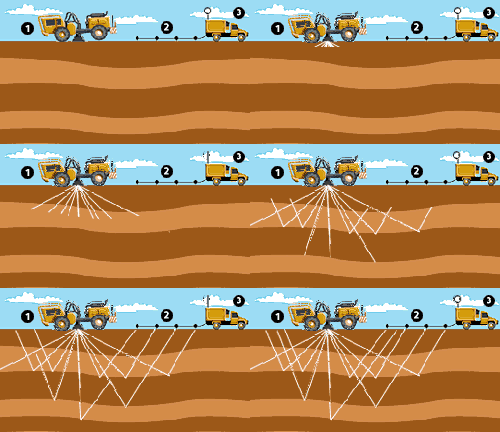
Gelombang kejutan akan dihantar ke dalam tanah menggunakan lori penggetar, dan masa yang diambil untuk pantulan bunyi dikira menggunakan alat yang dipanggil geophones. Caj dinamit awal telah digunakan tempat trak penggetar untuk mengumpul data, tetapi penggunaan telah diharamkan atas sebab-sebab alam sekitar.

Data yang dikumpul dari geophones dipanggil data geophone ditukar ke dalam barisan seismik oleh komputer moden. Data-data ini digunakan oleh ahli geologi untuk mewujudkan satu model 3-D komputer dinamik dan geometri batu di bawah bumi. Geophysicist membantu mentafsirkan data seismik untuk mewujudkan gambaran yang terperinci tentang dasar laut di bawah batu. Sekarang ahli geologi dan geofizik bekerjasama untuk mewujudkan lokasi tepat tapak minyak untuk menggerudi lubang.

Selepas ini datang gerudi untuk minyak. Penggerudian adalah satu operasi yang sangat mahal tetapi adalah cara terbaik untuk mencari minyak. Ini adalah peringkat apabila teori dikemukakan kepada ujian praktikal. Gerudi membantu memahami komposisi batu dan hadir bendalir dalam batu. Maklumat ini dipanggil juga balak membantu interpretasi data dan keputusan penting sama ada untuk meneruskan penerokaan atau meninggalkan ia.

Walaupun dengan semua alat-alat moden, penerokaan minyak mempunyai kadar kegagalan yang teramat sangat tinggi, dan seterusnya pengeluar minyak kelihatan untuk tidak begitu mengembangkan telaga sedia ada kerana ia adalah lebih kepada kos efektif yang tersangat besar. Tetapi tiada apa yang mustahil mengenai kekayaan penemuan minyak tersebut.
Nasib juga berperanan dan di perhitung dalam arena penemuan tersebut.

Bahawasanya apabila atau sedang kita mengisi minyak atau gas berkenaan di mana mana lokasi dan di situlah anda akan tahu bagaimana ianya datang beserta terjawaplah serba sedikit beberapa persoalan yang bermain di minda pemikiran kita mengenai minyak tersebut.


English Version :

Many of us are aware of the value of oil and very aware of the oil price rise. Oil drills and oil exploration float to mind every time the oil prices go north. But are we aware of the process behind the hydrocarbon reaching the surface? 
Here it is:

It starts with a company obtaining licence to explore oil in a specified area which could be sea, land, forest or ice. The first thing the company strives to do is create a comprehensive picture of area above and below the oil. So, the first step is survey. The company may use Aerial survey: Aerial photographs and satellite pictures to get the data. Magnetic survey:establish the force of gravity. Seismic survey: detailed analysis of the underlying rocks using sound. Then the exploration process:
Shock waves are sent into the ground using vibrator trucks, and the time taken for the reflection of the sound is calculated using devices called geophones. Earlier dynamite charges were used in place of the vibrator trucks to collect the data, but the use has been banned for environmental reasons.
The data collected from the geophones called geophone data are converted into seismic lines by modern computers. These data are used by the geologist to create a 3-D computer model of the dynamics and geometries of the rocks below the earth. Geophysicist help interpret the seismic data to create a detailed picture of the under rock/undersea. Now the geologist and geophysics work together to establish the precise location of oil site to drill the holes.
After this comes the drill for oil. Drilling is a very expensive operation but is the best way to find oil. This is the stage when theory is put to practical test. The drill helps understand the composition of the rocks and the fluid present in the rocks. This information called well logs help data interpretation and the crucial decision of whether to continue the exploration or abandon it.
Even with all the modern tools, oil exploration has a high failure rate, and hence oil producers look to expand existing wells as it is more cost effective. But nothing beats the discovery of an oil rich well, luck favoured.
Next time you go to fill gas, you'll know how it came to be there. 
Won't you?


Jerusalem Issue

Israel feels heat from allies over settlements


JERUSALEM (AP) — Israel rejected a wave of American and European condemnations Monday over plans to build thousands of new homes in West Bank settlements, vowing to press forward with the construction in the face of widespread international opposition.


The E1 project at the Jewish West Bank settlement of Maaleh Adumim, near east Jerusalem, Sunday, Dec. 2, 2012. Israel on Sunday roundly rejected the United Nations' endorsement of an independent state of Palestine, and announced it would withhold more than $100 million owed to the Palestinians in retaliation for their successful statehood bid. Israel has a master plan to build 3,600 apartments and 10 hotels on the section of territory east of Jerusalem known as E1. The Palestinians have warned that such construction would kill any hope for the creation of a viable state of Palestine.

GLOBAL AP ISSUE


AP IMPACT: China overtaking US as global trader.
An employee of ENA Industry, run by chief executive Shin Cheol-soo, works at its assembly line in Gyeongsan, south of Seoul, South Korea. Shin no longer sees his future in the United States. The South Korean businessman supplied components to American automakers for a decade. But this year, he uprooted his family from Detroit and moved home to focus on selling to the new economic superpower: China.

Masked employees work as Shin Cheol-soo, standing at right in the background, chief executive of ENA Industry, tours his company's assembly line in Gyeongsan, south of Seoul, South Korea. Shin no longer sees his future in the United States. The South Korean businessman supplied components to American automakers for a decade. But this year, he uprooted his family from Detroit and moved home to focus on selling to the new economic superpower: China. In just five years, China has surpassed the United States as a trading partner for much of the world, including U.S. allies such as South Korea and Australia, according to an Associated Press analysis of trade data.

SEOUL, South Korea (AP) — Shin Cheol-soo no longer sees his future in the United States.
The South Korean businessman supplied components to American automakers for a decade. But this year, he uprooted his family from Detroit and moved home to focus on selling to the new economic superpower: China.
In just five years, China has surpassed the United States as a trading partner for much of the world, including U.S. allies such as South Korea and Australia, according to an Associated Press analysis of trade data. As recently as 2006, the U.S. was the larger trading partner for 127 countries, versus just 70 for China. By last year the two had clearly traded places: 124 countries for China, 76 for the U.S.

EDITOR'S NOTE

This is the first installment in "China's Reach," a project that will analyze China's influence with its trading partners over three decades, and explore how that is changing business, politics and daily life. Keep up with AP's reporting on China's Reach, and join the conversation about it, using the hashtag (hash)AP China Reach on Twitter.
In the most abrupt global shift of its kind since World War II, the trend is changing the way people live and do business from Africa to Arizona, as farmers plant more soybeans to sell to China and students sign up to learn Mandarin.
The findings show how fast China has ascended to challenge America's century-old status as the globe's dominant trader, a change that is gradually translating into political influence. They highlight how pervasive China's impact has been, 
spreading from neighboring Asia to Africa and now 

emerging in Latin America, the traditional U.S. backyard.

Despite China's now-slowing economy, its share of world output and trade is expected to keep rising, with growth forecast at up to 8 percent a year over the next decade, far above U.S. and European levels. This growth could strengthen the hand of a new generation of just-named Chinese leaders, even as it fuels strain with other nations.
Last year, Shin's ENA Industry Co. made half his sales of rubber and plastic parts to U.S. factories. But his plans call for China, which overtook the United States as the biggest auto market in 2009, to rise fivefold to 30 percent of his total by 2015. He and his children are studying Mandarin.
"The United States is a tiger with no power," Shin said in his office, where three walls are lined with books, many about China. "Nobody can deny that China is the one now rising."
Trade is a bit like football — the balance of exports and imports, like the game score, is a neat snapshot of a jumble of moves that make up the economy, and both sides are apt to accuse each other of cheating from time to time. Also, the U.S. and China are both rivals and partners who can't have a match without each other, and a strong performance from both is good for the entire league.
Trade may get less publicity than military affairs or diplomacy, yet it is commerce that generates jobs and raises living standards. Trade can also translate into political power. As shopkeepers say, the customer is always right: Governments listen to countries that buy their goods, and the threat to stop buying is one of the most potent diplomatic weapons.
China has been slow to flex its political muscle on a large scale but is starting to push back in disputes over trade, exchange rates and climate change.
"When a German chancellor or French president goes to China, right at the top of the list, he's trying to sell Airbuses and other products and is being sensitive to China's political concerns, like on human rights," said C. Fred Bergsten, a former U.S. Treasury Department official who heads the Peterson Institute for International Economics in Washington.
The United States is still the world's biggest importer, but China is gaining. It was a bigger market than the United States for 77 countries in 2011, up from 20 in 2000, according to the AP analysis.
The AP is using International Monetary Fund data to measure the importance of trade with China for some 180 countries and track how it changes over time. The analysis divides a nation's trade with China by its gross domestic product.
The story that emerges is of China's breakneck rise, rather than of a U.S. decline. In 2002, trade with China was 3 percent of a country's GDP on average, compared with 8.7 percent with the U.S. But China caught up, and surged ahead in 2008. Last year, trade with China averaged 12.4 percent of GDP for other countries, higher than that with America at any time in the last 30 years.
Of course, not all trade is equal. China's trade is mostly low-end goods and commodities, while the U.S. competes at the upper end of the market.
Also, even though Chinese companies invest abroad and employ thousands of foreign workers, they lag behind American industry in building global alliances and in innovation, which is still rewarded in the marketplace. China's competitive edge remains low labor and other costs, while the U.S. is the world's center for innovation in autos, aerospace, computers, medicine, munitions, finance and pharmaceuticals. The Chinese have yet to build a car that will pass U.S. or European emission standards.
And the United States still does more trade overall — but just barely. If the trend continues, China will push past the U.S. this year, a remarkable feat for a country so poor 30 years ago that the average person had never talked on a telephone.
"The center of gravity of the world economy has moved to the east," said Mauricio Cardenas, the finance minister in Colombia. Like most of Latin America, his country is still more closely tied to the U.S., but its trade with China has risen from virtually nothing to 2.5 percent of GDP, a more than tenfold increase since 2001. "I would say that there is nothing comparable in the last 50 years."
In one sense, China's growing presence in trade is just restoring the Middle Kingdom to its historic dominance. China was the biggest economy for centuries until about 1800, when the Industrial Revolution propelled first Europe and then the U.S. into the lead.
China began its return to the global stage in the 1990s as a manufacturer of low-priced goods, from T-shirts to toys. Factories in other countries slashed costs to meet the "China price" or were pushed out of the market.
As the new millennium dawned, the U.S. remained by far the world's dominant trader, rivaled collectively by Europe but no single nation. However, from 2000 to 2008, China's imports grew 403 percent and exports 474 percent, driven in part by its entrance into the World Trade Organization and its move to higher-value production.
China's imports of oil and raw materials for its factories propelled resource booms in parts of Asia, Africa and Latin America. China's demand for steel for manufacturing and construction grew so fast that its mills now consume half the world's output of iron ore.
Zambia, a major copper producer, switched to the China column in 2000. Australia, a coal and iron ore exporter, followed in 2005. Chile, another copper supplier, moved in 2009.
Meanwhile, exports surged as Apple, Samsung, Nokia and other electronics giants shifted final assembly to China. Shipments of mobile phones, flat-screen TVs and personal computers have jumped sevenfold over the past decade to nearly $500 billion. That made China a major customer for high-tech components supplied by countries such as South Korea, which swung into China's column in 2003, followed by Malaysia in 2007.
In the U.S., Vermont-based manufacturer SBE Inc. started exporting capacitors — energy-storage devices used in computers, hybrid cars and wind turbines — in 2006. The company now gets 15 to 20 percent of its revenue from China, and has hired 10 employees there.
As China grew richer, its people spent more.
Chinese ate more pork, fried chicken and hamburgers, rapidly sending up the demand for soybeans to make cooking oil and feed for pigs and cows. Some cattle ranchers in Latin America turned grazing land into fields of soy, a crop few in their region consume. Soybean exports helped push Brazil into the China column in 2010, and put China neck and neck with the U.S. as Argentina's top trading partner.
In the Brazilian state of Mato Grosso, some 10,000 miles (17,000 kilometers) from Beijing, farmer Agenor Vicente Pelissa and his family raise cattle and soy on 54,300 acres, a farm twice the size of Manhattan. Half their 21,000-ton annual soybean harvest goes to China.
"We've invested more in technology and in better machines and equipment to meet this rising demand," Pelissa said. "If it hadn't been for China, we would not have not modernized our operations, at least not as quickly as we did."
Even in the U.S., better known for manufacturing, farmers are rushing to sell to China. The United States is the largest exporter of soybeans to China, followed by Brazil and Argentina. China's purchases of American soybeans have risen from almost nothing 20 years ago to a quarter of the crop: 24 million tons worth $12.1 billion, America's largest export to China.
The boom is having a profound effect on farming communities, said Grant Kimberley, whose family farm near Des Moines, Iowa, now grows 4,000 acres of soybeans, up from 3,500 eight years ago.
"It's provided more revenue for these farmers than they've ever seen in their lives," said Kimberley, who is also director of market development at the Iowa Soybean Association. He said he sees more young people returning to the farm. "People can see there's an opportunity to make nice livings for their families."
It was the 2008 global crisis that showed the resilience of China's exporters.
The recession set everyone back, but China less so than the U.S. or other major traders such as Germany. China does a bigger share of its trade with developing countries that suffered less and rebounded faster, while the United States sells to rich economies that are struggling. Chinese companies have boosted exports by 7 percent this year despite anemic global demand.
During the recession, Shin, the South Korean auto parts manufacturer, saw his sales fall 50 percent. He shut one of three production lines, and banks stopped lending him money.
But China's auto market was powering ahead. So Shin hired an employee in China, and is now making plans for his first factory there. On a business trip to Germany, clients told him their Chinese factories would be larger than those at home.
Parents like Shin, who work at companies doing business with China, in turn fed enrollment growth at schools such as Teacher Ching, a Chinese-language kindergarten in Seoul.
Nancy Ching, the daughter of immigrants from Taiwan, opened the school with 15 students in 2004, the year after South Korea first moved from the U.S. column to the China column. Today she has 60.
"Mothers who send their kids here believe our children's generation is the China generation," she said in Chinese-accented Korean. "In the future, without learning Chinese, one won't be able to get a job."
China resumed its upward trajectory in the last two years. Even with key Western markets in a slump, exports are up 58 percent since 2009. Imports are up an even sharper 73 percent.
Rising incomes have driven demand for wine and other luxury goods, making China a lifeline for European and American vineyards when the global crisis battered traditional markets.
The Chinese have "helped Bordeaux a lot these past three years," said Florence Cathiard, owner of Chateau Smith Haut Lafitte in the Pessac-Leognan area of France's southwest, home of high-end Bordeaux wine.
France's wine exports to China first surged in 2009, and by last year, China had surpassed the U.S. as a customer by volume. Americans still spend more, because they buy more expensive wines. But China is developing a taste for grand cru wine, the "great growths" that are considered exceptional and command higher prices.
Cathiard acknowledged that she was initially wary of China as a reliable market for her high-end wines. But the turning point for her came around 2008, when she was blown away by the number of people showing up for a master class by her chateau at a wine expo in Hong Kong.
China now accounts for 25 percent of Cathiard's sales, making it her largest market.
The owners of Chateau Haut-Bailly, also in Pessac-Leognan, first traveled to China to test the waters in 2000, and it was too early.
"At the time, they didn't know what a cork or a corkscrew was," said Veronique Sanders, the chateau's general manager.
Chinese sophistication has since advanced rapidly, she said.
"The difference with other emerging markets we've gone into in the past is the size of the country, which means it has an absolutely incredible potential."
The next step in China's trade evolution is to move beyond exporting TVs and lawn furniture to selling services and investing abroad.
The investment trend started with state-owned companies that bought stakes in foreign mines and oil fields. Smaller and private Chinese companies followed, acquiring foreign enterprises to gain a bigger foothold in overseas markets, more access to resources and better technology for their own development.
China is now pushing into construction and engineering, where U.S. and European companies have long dominated.
In Algeria, Chinese state-owned companies pushed aside established French and German rivals to win contracts to build a $12 billion cross-country highway and the $1.3 billion Great Mosque of Algeria. The Chinese have also built highways, dams and other projects in developing countries and are starting to win contracts in the U.S. and Europe.
On a new 50-kilometer (30-mile) highway leading north of Nairobi, the capital of Kenya, dark asphalt stretches across six to eight lanes.
The $300 million road was built by three Chinese companies and financed by the African Development Bank and the Export-Import Bank of China. It has cut a trip that took several hours 18 months ago to 10 minutes, said Joseph Makori, a professional driver.

"When we see the people from America, they say, 'We want to assist Kenya'," said Makori as he looked for work at an interchange about 10 kilometers from downtown. "But I don't see it. China comes and I see one thing: the road."
Chinese companies are starting to win government contracts in Kenya, which has ports that offer access to landlocked Uganda, South Sudan and Rwanda. Governments in Africa are keen to work with China because it does not tie development to human rights or democracy, said Stephen Mutoro, secretary general of the Consumer Federation of Kenya.
"China appears to have a long-term plan based on increasing its commercial interests where governance issues are given a back burner," Mutoro said. The experience of Congo might foreshadow a more complex approach that Beijing envisages for other African nations. In 2008, the two governments signed a $9 billion deal for Chinese companies to build 177 hospitals and health centers, two hydroelectric dams and thousands of miles of railways and roads. In exchange, Congo was to provide 10.6 million tons of copper and 600,000 tons of cobalt.
The deal has since been scaled back to $6 billion under pressure from the International Monetary Fund, which felt Congo was taking on too much debt.
China's outbound investment totaled $67.6 billion last year — just one-sixth of America's nearly $400 billion — but it could reach $2 trillion by 2020, according to a forecast by Rhodium Group, a research firm in New York City.
As a result, Chinese companies are using a new export — jobs.
Employees at Volvo Cars worried after Chinese automaker Geely Holdings bought the money-losing Swedish brand from Ford Motor Co. in 2010. But two years later, instead of moving jobs to China, Geely has expanded Volvo's European workforce of 19,500 to about 21,500.
Majority-owned U.S. affiliates of Chinese companies support about 27,000 American jobs, up from fewer than 10,000 five years ago, according to Rhodium.
In Goodyear, Arizona, Stacey Rassas was laid off in May 2010 after a 16-year career in quality control for aerospace and aluminum manufacturers. By late autumn, she and her husband were worried they might lose their house.
She finally landed a job that December at a new factory that makes solar panels for one of the world's biggest solar manufacturers.
"It was the best day ever," she said.
Her new employer? Suntech Power Holdings Co., a Chinese company.
McDonald reported from Beijing. AP Business Writers Sarah DiLorenzo in Paris and Jonathan Fahey and Scott Mayerowitz in New York and AP writers Michelle Faul in Johannesburg; Louise Nordstrom in Stockholm; Luis Andres Henao in Santiago, Chile; Cesar Garcia in Bogota, Colombia; Paul Schemm in Algiers, Algeria; Stan Lehman in Sao Paulo; Troy Thibodeaux in New Orleans; and Jason Straziuso and Tom Odula in Nairobi, Kenya; and AP interactive producer Pailin Wedel in Bangkok contributed.

Vehicles make their way along a new 50-kilometer (30-mile) highway leading north of the capital of Nairobi in Kenya. The $300 million road was built by three Chinese companies and financed by the African Development Bank and the Chinese Exim Bank. It has cut a trip that took several hours 18 months ago to 10 minutes, said Joseph Makori, a professional driver.

Sunday, 2 December 2012

The Great Faiza

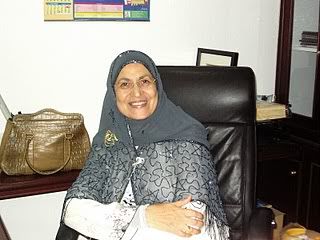
"Faiza" anak sulung daripada tujuh orang adik beradik, berumur 68 tahun. Bapanya seorang tahfiz dan peniaga kedai makanan di Mesir pada suatu ketika dahulunya.


Faiza Bawumi Sayed Ahmad

Nama beliau ialah Faiza Bawumi Sayed Ahmad, anak sulung daripada tujuh orang adik beradik, berumur 68 tahun. 

Bapanya pula Seorang Tahfiz dan peniaga kedai makanan di Mesir pada suatu ketike dahulunya.

Menurut Faiza, beliau datang ke Malaysia pada tahun 1964 kerana mengikut suaminya Allahyarham Abu Bakar Ahmad yang berhijrah ke Malaysia pada ketika itu.


Seperti yang kita sedia maklum, Syarikat Faiza Sdn. Bhd merupakan penaja program realiti di TV3 bertajuk Bersamamu. Pengasas syarikat ini merupakan anak kelahiran Negara Mesir dan berhijrah ke Malaysia mengikut arwah suaminya, Abu Bakar setelah mempunyai seorang anak. Kini beliau mempunyai seramai tujuh orang anak. 

Nama beliau ialah Faiza Bawumi Sayed Ahmad, anak sulung daripada tujuh orang adik beradik, berumur 68 tahun. 
Bapanya seorang tahfiz dan peniaga kedai makanan di Mesir. Menurut beliau, kejayaannya sekarang bukan diperolehi dengan mudah, tetapi setelah mengharungi segala cabaran selama 43 tahun berkecimpung dalam dunia perniagaan.Beliau membangunkan syarikatnya daripada bisnes runcit biasa yang dijalankan di rumah menjadi antara pemborong beras yang terkemuka di Malaysia. Ibu pejabat Syarikat Faiza Sdn. Bhd kini terletak di Batu Pahat Johor. 

Walaupun sibuk menjalankan perniagaan, Faiza tetap meluangkan masa untuk melakukan kerja amal termasuk memegang jawatan sebagai Yang Dipertua Pemborong Beras Bumiputera Malaysia, Pengerusi Wanita Pertubuhan Kebajikan Islam Malaysia (Perkim) Batu Pahat, Anggota Jawatankuasa Umno Bahagian Batu Pahat (Penger usi Biro Kebajikan) dan pemegang amanah anak yatim Batu Pahat. 

Bak kata pepatah, "kalau tidak dipecahkan ruyong manakan dapat sagunya". Sebelum Syarikat Faiza berada pada tahap sekarang pelbagai cabaran dilalui oleh Puan Faiza sendiri. Selepas berhijrah ke Malaysia kerana mengikut suaminya, bermulalah cabaran hidup anak kelahiran Mesir ini sebelum menjadi seorang usahawan yang berjaya. 


“ Saya nak jadi pembayar zakat terbesar di negara ini.” itulah sebahagian kata kata beliau marak sehingga sekarang dan Ahamdulillah beliau sudah berjaya mengecapi  dan menikmatinya pada era masa kini.


Suaminya sibuk dengan urusan kadi, Makcik ni mula memikirkan aktiviti berfaedah yang dapat beliau berbuat sesuatu bagi mengisi masa lapangnya. Puan Faiza dapat berbahasa Melayu dalam masa hanya tiga bulan kerana sifat beliau yang peramah dan suka bergaul dengan jiran jirannya.Antara akti iti awal yang beliau lakukan adalah mengambil upah menjahit sulaman bermodalkan RM4.00, membeli kain ela dan membuat baju gaun untuk anak anak kecil jirannya. Kemudian beliau menghasilkan set sarung bantal. Hasil jahitannya yang cantik dan kemas di jual kepada kawan dan jirannya. Seterusnya, beliau berniaga set ensiklopedia, diikuti bisnes pinggan mangkuk. Melalui bisnes kecil kecilan ini, beliau menabung wang bagi menjadikan modal bisnes seterusnya. 

Ketika tinggal di Mersing, Puan Faiza ni berminat pula menghasilkan rempah kari. Beliau membeli pelbagai rempah ratus seperti ketumbar, jintan, halba, cili kering, cengkih dan sebagainya untuk membancuh ramuan ramuan itu bagi menghasilkan rempah kari ikan dan daging. Semuanya dilakukan sendiri, daripada mencuci, menjemur dan menggoreng rempah ratus tersebut. Kemudian beliau menghantarnya ke kedai bagi dikisar.


Berkecimpung dalam perniagaan sejak kecil, Faiza pernah menjadi juruwang di kedai milik bapanya. Pengalaman tersebut mendorong beliau untuk bergiat secara serius dalam bidang perniagaan.
“Kejayaan ini tidak datang dengan mudah, saya bermula dengan mengambil upah menjahit sulaman dengan modal RM4 selain menjual pelbagai barangan dapur. “Kemudian, saya beralih membuat rempah kari di bawah jenama Bunga Raya yang dilakukan di rumah dan mengedarkannya di kedai-kedai,” katanya yang mampu menguasai bahasa Melayu setelah tiga bulan berada di Malaysia. Ibu kepada tujuh anak itu menambah, modal daripada menjual rempah kari itu digunakan untuk membuka kedai runcit. Dari situ beliau mendapati pemborong beras kebanyakannya dibekalkan oleh kaum lain.
Dengan mempunyai kedai sendiri, beliau mula belajar mengenali pelbagai jenis beras. Sebelum menjual beras, beliau terpaksa pergi dari satu kedai ke kedai lain bagi mendapatkan maklum balas sama ada mereka akan membeli berasnya jika beliau menjualnya. Atas respons yang positif, Faiza memohon lesen pemborong beras dan menjual pelbagai jenis beras termasuk beras Ponni, beras Basmathi, beras Wangi serta beras Siam. “Pada mulanya, saya buntu juga melihat satu lori treler penuh berisi beras diletakkan di hadapan rumah, namun saya nekad membungkus menggunakan jenama Bunga Raya dan menghantar ke kedai-kedai di seluruh Johor. “Sehingga kini, perniagaan beras keluaran syarikat saya mendapat sambutan. Meskipun saingan sengit, kami telah dikenali kerana kualiti produk yang tinggi, seratus peratus buatan Islam dan halal,” katanya yang kini mempunyai kilang di Kuala Lumpur, Kedah dan Terengganu.
Pada tahun 1998, beliau terdorong mempromosi beras Ponni dari India yang dipercayai baik untuk kesihatan, khususnya bagi penghidap diabetes, obesiti dan darah tinggi. Faiza berkata, bagi membuktikan kebaikan beras itu, syarikatnya telah meminta Universiti Putra Malaysia (UPM) membuat kajian dan hasilnya memang positif. “Saya melabur berjuta ringgit bagi produk Taj Mahal dan telah meminta hak eksklusif daripada Bernas,” tambahnya yang gembira dengan sambutan orang ramai terhadap produk tersebut. Walaupun syarikatnya menumpukan produk beras dan rempah, kini beliau sedang meneroka bidang baru termasuk memasarkan bihun, sos cili dan kicap.
Beliau yang mempunyai 200 pekerja tetap dan lebih 300 pekerja kontrak berkata, dengan penglibatan dalam penghasilan produk tersebut ia memberi pilihan kepada orang Islam untuk mendapatkan produk yang bermutu tinggi dan tanpa diragui status halalnya. Ketika ini, syarikatnya telah memasarkan bubur herba penghujung tahun lalu dan mendapat permintaan yang baik daripada para pelanggan. Bagi produk bihun pula, syarikatnya telah menempah mesin dari China dan produk itu akan diproses di sebuah kilang lain juga di Sri Gading. Kilang tersebut mampu mengeluarkan sebanyak sembilan tan bihun sehari, namun pada peringkat awal cuma memproses lima tan bihun dengan sasaran jualan sebanyak RM12 juta bagi tahun pertama.
Pada tahun 1999 syarikat itu menjalankan usahasama dengan Bernas dan menjadi ahli kumpulan Bernas. Kini kilang beras Faiza tersebut beroperasi di tapak seluas 40 000 kaki persegi dan menggunakan peralatan berteknologi tinggi.
Sebagian daripada jenama produk Faiza


Kehidupan


Faiza 68 berkata, "Memantapkan Ukhuwah, Memperkasa Ummah" semua masyarakat Islam juga perlu mengamalkan cara hidup dengan berpegang kepada ajaran Al-Qur'an, dan bersikap sentiasa senang hati apabila melihat kesenangan orang lain, dan bukannya berperasaan iri hati serta berhasad dengi apabila melihat kejayaan orang lain. Hindarilah atau jauhilah sikap mengambil kesempatan untuk keutamaan kepentingan diri terhadap kelebihan dan kejayaan seseorang itu kerana kehancuran dalam kehidupan sering menanti kita.


PuanFaizah yang suka hidup bermasyarakat berkata, semua usaha yang dilakukan itu bukanlah untuk mengumpulkan kekayaan sebaliknya untuk menjadi pembayar zakat terbesar di Malaysia sekali gus membantu lebih ramai orang yang susah. Sebab itulah, syarikatnya bekerjasama dengan TV3 selaku penaja utama sejak lapan tahun lalu menerusi program Bersamamu. Dari segi kehidupan berkeluarga, Faizah menerapkan pendekatan supaya anak-anaknya hidup berdikari. Sejak kecil anak-anaknya dilatih menjual dan mereka mendapat upah.

Bagaimanapun katanya, pendidikan menjadi keutamaan dan mereka diberi peluang menuntut ilmu setinggi mungkin. “Bukan semua anak saya terlibat dalam perniagaan, anak sulung dan kelima menjadi pensyarah dan lima yang lain membantu Syarikat Faiza,” katanya. Bercerita tentang pengalaman menguruskan perniagaan tersebut, beliau pernah menangkap pekerja yang menipu dan mencuri. “Macam-macam cara orang hendak menipu dan saya pernah menangkap pekerja yang menjual guni beras yang dimasukkan ke dalam lori. Guni beras ini harganya mahal di pasaran,” katanya.

Ketika kebanyakan wanita yang seusianya berehat di rumah, Faiza pula sibuk merancang strategi bagi mengukuhkan kedudukannya dalam perniagaan beras di negara ini.Faiza bukan sahaja menjadi Pengarah Urusan Syarikat Faiza, tetapi turut bertungkus-lumus menentukan operasi syarikat berjalan lancar. Wanita ini turut terlibat dalam projek kilang milik Syarikat Faiza bernilai RM14 juta di Sri Gading, Batu Pahat, di sini yang akan dibina tidak lama lagi katanya kepada Utusan Malaysia di sini. Semangat berniaga bagi wanita yang berasal dari Mesir ini telah tertanam sejak kecil lagi kerana bapanya adalah seorang peniaga kedai makanan. Beliau tidak menyangka pengalamannya sebagai juruwang di kedai bapanya dahulu telah mendorongnya bergiat serius sebagai peniaga. Menurut Faiza, kejayaannya sekarang bukan diperolehi dengan mudah, tetapi setelah mengharungi segala cabaran selama 43 tahun berkecimpung dalam dunia perniagaan.


Menurut Faiza, beliau datang ke Malaysia pada tahun 1964 kerana mengikut suaminya. Disebabkan sikapnya yang tidak betah duduk diam, dia mengambil upah menjahit sulaman dan menjual pelbagai barangan dapur. Faiza kemudian membuat rempah kari di bawah jenama Bunga Raya dan mengedarkannya di kedai-kedai. “Sebelum saya menjual beras, saya terpaksa pergi dari rumah ke rumah bertanyakan sama ada pelanggan mahu membeli beras sekiranya saya menjualnya,” katanya.Beliau kemudian memohon lesen pemborong beras dan menjual beras pelbagai jenis termasuk Ponni, Basmathi, beras Wangi, beras Siam. Dalam tempoh sembilan tahun, perniagaan beras keluaran syarikatnya mendapat sambutan baik. Katanya, daripada hanya dikenali di sekitar negeri Johor, jenama Beras Faiza melebarkan sayapnya ke Melaka dan Kuala Lumpur.


BATU PAHAT, 26 Feb (Bernama News)

Kesenangan yang ada perlu dikongsi bersama dengan mereka yang memerlukan, terutama golongan miskin dan ibu tunggal, kata Faiza Bawumi Sayed Ahmad, tokoh Maulidur Rasul peringkat kebangsaan tahun ini.Faiza, yang merupakan Pengarah Urusan Syarikat Faiza Sdn Bhd, yang sinonim dengan program realiti televisyen swasta tempatan yang berbentuk amal "Bersamamu" kerana syarikat itu merupakan penaja utama rancangan tersebut, berkata hasratnya kini adalah untuk menubuhkan Yayasan Faiza bagi membantu golongan tersebut."Pengalaman turun padang mendekati kehidupan golongan susah dan ibu tunggal membuatkan saya berhasrat untuk menubuhkan Yayasan Faiza satu hari nanti bagi menguruskan hal kebajikan dan sumbangan kepada orang ramai. 

Niat saya hanya satu, iaitu tujuan saya berniaga bukan untuk kekayaan diri sendiri, tetapi untuk membantu orang lain terutama golongan miskin dan ibu tunggal menikmati kehidupan yang baik," katanya kepada Bernama di sini baru-baru ini. Faiza juga turut menyarankan umat Islam di negara ini supaya hidup bersatu padu supaya tidak mudah ditindas oleh bangsa lain, dan hubungan yang kukuh sesama umat Islam bukan sahaja mampu memajukan masyarakat Islam di negara ini, malah mampu meningkatkan kedudukan ekonomi masyarakat tersebut.

"Kita kena bersatu supaya tiada sesiapa dapat pecah-belahkan kita. Bila kita lemah, kita kena tindas. Ibarat lidi, bila ia satu, maka ia mudah dipatahkan tetapi apabila ia banyak, maka tidak dapat dipatahkan dengan mudah," kata anak kelahiran Mesir yang berhijrah ke Malaysia mengikuti suaminya Allahyarham Abu Bakar Ahmad yang merupakan rakyat Malaysia pada tahun 1964. Faiza, 68, berkata selaras dengan tema sambutan Maulidur Rasul kali ini iaitu "Memantapkan Ukhuwah, Memperkasa Ummah", semua masyarakat Islam juga perlu mengamalkan cara hidup dengan berpegang kepada ajaran Al-Qur'an, dan bersikap sentiasa senang hati apabila melihat kesenangan orang lain, dan bukannya berperasaan iri hati serta berhasad dengi apabila melihat kejayaan orang lain.

Faiza berkata pengalamannya berniaga, termasuk berurusan dengan bangsa lain membuka mindanya untuk menyedarkan masyarakat Islam khususnya orang Melayu betapa perlunya mengamalkan sikap tolong-menolong antara satu sama lain seperti yang diamalkan bangsa lain. "Pernah seorang peniaga bukan Melayu meminta saya berfikir antara dua jenis ketam iaitu ketam Melayu dan ketam bukan Melayu. Mulanya saya tidak faham apa yang dimaksudkannya dengan dua jenis itu sehinggalah peniaga itu kemudian menjelaskan bahawa ketam Melayu akan menarik kawannya jatuh ke bawah ketika berjalan mendaki bukit, manakala ketam bukan Melayu pula akan menolong kawan-kawannya,"katanya.

Faiza yang memiliki diploma dalam bidang jahitan sebelum berjaya mendirikan perusahaannya sekarang mula menceburi bidang perniagaan secara kecil-kecilan dengan menjahit pakaian, dan kemudian mengusahakan perusahaan rempah giling yang dijual kepada jiran serta kedai, sebelum membuka kedai runcit pada tahun 70-an. Beliau memasuki bidang pembekal dan pemborong pada tahun 1982 sebelum menubuhkan Syarikat Faiza Sdn Bhd yang menjalankan aktiviti memproses dan mengedarkan beras berpangkalan di Batu Pahat pada tahun 1992. 


Ibu kepada tujuh orang anak dan mempunyai 32 orang cucu itu juga berharap masyarakat Islam sentiasa mencontohi keperibadian Nabi Muhammad S.A.W dalam menjalankan kehidupan seharian, terutama amanah dan gigihnya Baginda Rasullulah dalam menjalankan perniagaan serta dalam menjalankan tanggungjawabnya sebagai pemimpin. 

Syarikat milik Faiza kini mengedar lebih 21 jenama beras di negara ini temasuk yang paling dikenali, "Herba Ponni Taj Mahal" dan anak syarikatnya, iaitu Faiza Marketing Sdn Bhd pula melibatkan diri dalam mengilang pelbagai jenis rempah termasuk rempah Raja Kari, rempah Bukhari dan terbaru, rempah rendang. Syarikat Faiza juga telah menerima pelbagai anugerah termasuk pemborong terbaik pada tahun 2000, anugerah kecemerlangan operasi Padi beras Nasional Berhad (Bernas) pada 2001 dan dan anugerah emas bagi beras Taj Mahal oleh Reader's Digest Super Brand. 

Walaupun sibuk menjalankan perniagaan, Faiza tetap meluangkan masa untuk melakukan kerja amal termasuk memegang jawatan sebagai Yang Dipertua Pemborong Beras Bumiputera Malaysia, Pengerusi Wanita Pertubuhan Kebajikan Islam Malaysia (Perkim) Batu Pahat, Anggota Jawatankuasa Umno Bahagian Batu Pahat (Pengerusi Biro Kebajikan) dan ahli lembaga pelawat Hospital Batu Pahat serta pemegang amanah anak yatim Batu Pahat. Beliau juga pernah memenangi pelbagai anugerah termasuk Wanita Anggun 2005, Tokoh Ibu Mithali Perkim 2007, Wanita Nadi Negara peringkat Johor 2007 dan anugerah khas Tokoh Guru 2009.
-- BERNAMA -- 


Sebahagian petikan di antara karektor beliau sepajang pejalannan perniagaan tersebut :

1. Bangun tidur pukul 4:30 pagi setiap hari dan tidur awal sekitar pukul 10.30 malam.

2. Tidak lupa membaca Al-Quran setiap hari.
3. Niat beliau untuk berniaga bukanlah untuk menjadi kaya raya, tetapi untuk mambantu masyarakat di negara ini seramai mana yang boleh agar mereka juga dapat merasa rezeki yang diperolehinya.
4. Mengamalkan solat sunat Dhuha dan tidak lupa membaca surah Al-Waqiah.
5. Menganggap semua pekerjanya sebagai anak sendiri.

6. Jika pekerja buat salah, beliau akan memberi amaran sebanyak tiga kali. Sekiranya tidak berubah jugak beliau akan memohon pada yang tersebut meletak jawatannya secara profesional dan tidak merugikan dirinya sendiri.


Bagoih : exelence bagoih bagoih bagoih..

Xiayangzhang Village


Lone Chinese home destroyed, farmer accepts deal


A house in the middle of a new road is being torn down on the outskirts of Wenling city, in eastern China's Zhejiang province, Saturday, Dec. 1, 2012. Authorities have demolished the five-story home that stood incongruously in the middle of the new main road and had become the latest symbol of resistance by Chinese homeowners against officials accused of offering unfair compensation.


BEIJING (AP) — Authorities have demolished a five-story home that stood incongruously in the middle of a new main road and had become the latest symbol of resistance by Chinese homeowners against officials accused of offering unfair compensation.
People stand near a house sitting in the middle of a new main road on the outskirts of Wenling city in east China's Zhejiang province. Authorities have demolished the five-story home that stood incongruously in the middle of a new main road and had become the latest symbol of resistance by Chinese homeowners against officials accused of offering unfair compensation.

Xiayangzhang village chief Chen Xuecai told The Associated Press the house was bulldozed Saturday after its owners, duck farmer Luo Baogen and his wife, agreed to accept compensation of 260,000 yuan ($41,000).
There was no immediate confirmation from Luo, whose cellphone was turned off Saturday. The couple had been the lone holdouts from a neighborhood that was demolished to make way for the main thoroughfare heading to a newly built railway station on the outskirts of the city of Wenling in Zhejiang province.
The razing comes a week after images of the house circulated widely online in China, triggering a flurry of domestic and foreign media reports about the latest "nail house," as buildings that remain standing as their owners resist development are called.
Luo, 67, had just completed his house at a cost of about 600,000 yuan ($95,000) when the government approached him with their standard offer of 220,000 ($35,000) to move out — which he refused, Chen has previously said. The offer then went up to 260,000 yuan ($41,000) last week.
It was not immediately clear why Luo accepted the compensation in a meeting with officials Friday afternoon when the amount of money offered was the same as a week ago. Village chief Chen said Luo was tired of all the media attention and voluntarily consented to the deal. "Luo Baogen received dozens of people from the media every day and his house stands in the center of the road. So he decided to demolish the house," Chen said.
Authorities commonly pressure residents to agree to make way for development with sometimes extreme measures, such as cutting off utilities or moving in to demolish when residents are out for the day. In Luo's case, however, he had told local reporters last week his electricity and water were still flowing.
Real estate is one of the big drivers of China's runaway growth in recent decades. But the rapid development has run into objections from many of the hundreds of thousands of residents who have been forced out to make way for new housing, factories and other business ventures, creating a major source of unrest.